


If you’re thinking about building an ADU in California, there are a few key things that can save you money, speed up your project, and keep your space livable from day one. Whether you’re in Sacramento looking to add a rental unit, a home office, or a guest suite, understanding building an ADU realistically—costs, timelines, and design trade‑offs—helps you avoid surprises later.
TL;DR – Building an ADU in California
- Garage conversions are usually the most cost‑effective way to go, often saving 20–40% vs. new‑build ADUs.
- Pitched ceilings make small ADUs feel much larger and more open, especially in 300–600 sq. ft. units.
- Smart built‑in storage keeps the space clutter‑free and actually livable for guests or tenants.
- Expect real‑world all‑in costs in the $150,000–$350,000 range for most California ADUs, with garage conversions often on the lower end and high‑end builds creeping toward $500K+ depending on size and finishes.
- Always bake in a 10–15% contingency for permits, utility tie‑ins, removal of trees/fences, and solar or code requirements.
For a deeper breakdown of ADU construction costs in California, see this detailed guide: How Much Does It Really Cost to Build an ADU in California?
Is a garage conversion the most cost‑effective way to build an ADU in California?
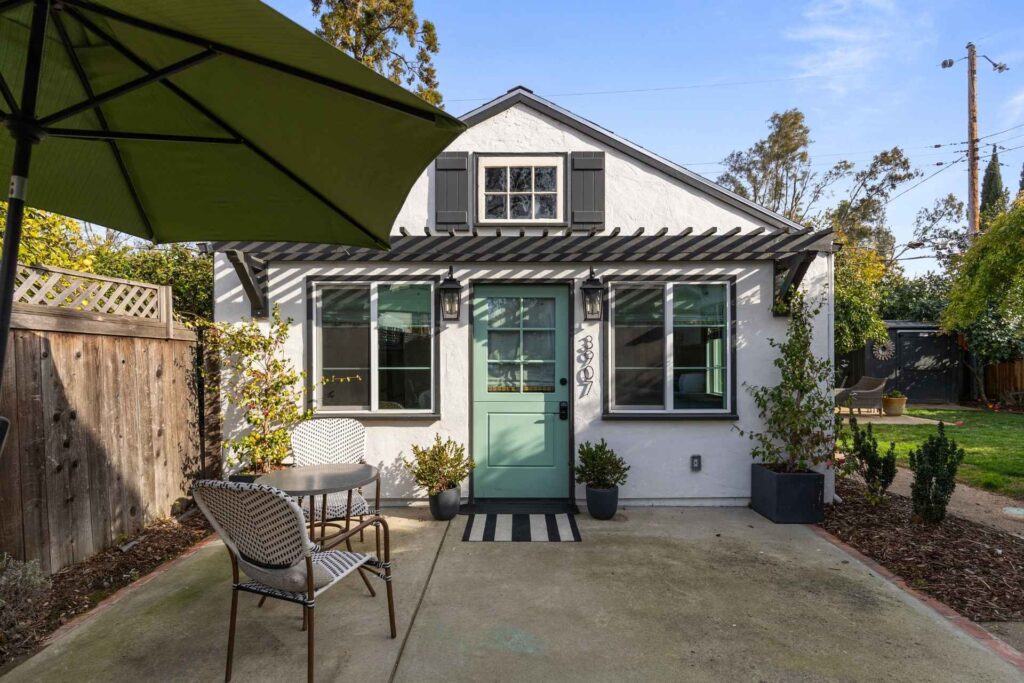
If you’re building an ADU in California on a budget (and most homeowners are), a garage‑to‑ADU conversion is usually the most cost‑effective path.
Why garage conversions save money:
- The foundation and framing are already there, cutting out major structural and excavation work.
- Detached garages often skip newer solar panel requirements that apply to new‑build ADUs.
- Permitting can be faster and cheaper in many Sacramento‑area cities because you’re reusing an existing structure.
Pro Tip (Dan, D. Loesch Construction):
“When you’re building an ADU in California, start by asking if your garage or existing structure can be converted. In many Sacramento projects we’ve done, simply reusing the garage slab can save $20,000–$50,000 compared with starting from scratch.”*Project costs shown below are approximate ranges and may vary depending on site conditions, location, utility access, finishes, city permits, and other factors. Always get a site‑specific quote for your property.
| ADU Type | Typical Size Range | All‑In Cost Range (CA) | Notes |
|---|---|---|---|
| Garage‑to‑ADU conversion | 400–600 sq. ft. | ~$150,000–$250,000 | Often 20–40% cheaper than new‑build due to reused structure. |
| Detached new‑build ADU | 600–1200 sq. ft. | ~$220,000–$500,000 | Higher per‑sq‑ft cost due to full foundation and full utility tie‑ins. |
| Junior ADU (JADU) in basement/attached | Up to 500 sq. ft. | ~$80,000–$200,000 | Often fastest and cheapest, but limited size. |
How can pitched ceilings make a small ADU feel more spacious when building an ADU in California?
Most ADUs are compact—often around 300–500 sq. ft.—so design tricks that add perceived space matter a lot when building an ADU in California. One of the best moves is a pitched ceiling (also called a vaulted or sloped ceiling).
Benefits of pitched ceilings:
- More vertical space: You gain headroom and visual height, so the room doesn’t feel like a box.
- Brighter, airier feel: Sloped ceilings let you install taller windows and skylights, flooding the space with light.
- Architectural character: Exposed collar ties or deep beams can add a warm, modern‑ranch or Craftsman‑style vibe without extra square footage.
Pro Tip (Dan, D. Loesch Construction):
“Early on when we started building an ADU in California, we noticed that owners consistently rated units with pitched ceilings as more comfortable—even when two units had the same square footage.”
How should you design ADU storage so the space doesn’t feel cramped?
Even a beautiful ADU can feel crowded if storage isn’t built in from the start. When you’re building an ADU in California, think long‑term about how the space will be used:
- As a rental unit with seasonal guests.
- As a home office by day and guest room by night.
- As an in‑law suite where someone may live full‑time.
Here’s how to design storage smartly:
- Murphy beds or fold‑out furniture: Let you turn a studio into a daytime office and nighttime bedroom.
- Walk‑in or oversized closets: Store seasonal items, luggage, and bulk supplies without cluttering the main living area.
- Separate “owner storage”: A small exterior or utility‑style storage area keeps tenant‑storage out of the main ADU footprint.
- Ductless mini‑split HVAC: No bulky ductwork or wall units frees up valuable wall and ceiling space.
Clutter kills comfort. The goal when building an ADU in California is to create a clean, open layout people actually want to rent or live in.
What hidden costs should you expect when building an ADU in California?
When you’re building an ADU in California, the headline “construction cost” is rarely the whole story. Many homeowners are surprised by hidden costs that can add 10–25% on top of their base budget.
Common hidden or underestimated costs:
- Utility tie‑ins: How far are water, gas, sewer, and electric lines? Long runs mean extra trenching and pipe work.
- Landscaping and site work: Removing trees, fences, or concrete pads to access the ADU site can cost thousands.
- Solar requirements: Some cities require solar panels for new‑build ADUs, while garage‑conversion ADUs often avoid them.
- City permits, impact fees, and engineering: Permits and fees vary widely by city or county and can easily run several thousand dollars.
Pro Tip (Dan, D. Loesch Construction):
“When we’re building an ADU in California, we always advise clients to add a 10–15% contingency into their budget. That buffer covers unexpected changes, code clarifications, and last‑minute site issues that are almost guaranteed.”
How can you build an ADU in California smarter—not harder?
As one of Sacramento’s top ADU builders, we’ve found that the most successful projects start with clear expectations. Here’s how to build smarter, not harder when building an ADU in California:
- Start by evaluating your garage or existing structure for a conversion; it’s often the most cost‑effective path.
- Use pitched ceilings and tall windows to make 300–600 sq. ft. feel like much more.
- Plan integrated storage from day one so the space stays livable and rent‑ready.
- Budget for all‑in costs, not just construction, and include a 10–15% contingency.
Want the full breakdown with real examples from the job site?
👉 Watch the full YouTube video here for in‑depth insights, visual walkthroughs, and cost‑saving tips from our team’s actual projects.
Frequently asked questions about building an ADU in California
How much does it cost to build an ADU in California?
In California, most ADUs fall in the $150,000–$350,000 all‑in range, with smaller garage conversions often on the lower end and high‑end units going higher depending on size and finishes.
How long does it take to build an ADU in California?
Many projects take 10–18 months from design through construction, though garage‑to‑ADU conversions can be faster, often around 6–10 months, depending on permitting and site complexity.
Do I need permits to build an ADU in California?
Yes, you’ll need permits for any ADU, but the state has streamlined the process. Exact rules and fees vary by city or county, so it helps to work with a local builder who knows Sacramento‑area requirements.
For an overview of 2025 California ADU laws and state‑level rules, see: Understanding the New ADU Laws in California in 2025 – Valley Home Builders
Does a garage‑conversion ADU count as a legal, rentable unit?
Yes, when done correctly with proper permits, insulation, heating, and utilities, a garage‑to‑ADU conversion is a legal dwelling unit that can be rented or used as a guest suite.
Can I build an ADU myself or should I hire a contractor?
While some homeowners DIY portions, ADUs involve complex code, permitting, and structural work. Hiring an experienced contractor often saves time and avoids costly rework, especially when building an ADU in California under Title 24 and local rules.

